
Introduction
When it comes to precise manufacturing, what appears to be an insignificant upfront plastic injection molding quote could be indicative of future cost overruns and delays in the process. It is typical for many buyers and engineers to encounter the same problem wherein once production begins, certain defects, such as design problems, molds, and materials, result in costly ECNs.
The root cause is a lack of deep, actionable engineering analysis during the quoting phase. Many quotes are simple price lists that fail to reveal the manufacturability risks inherent in the design, effectively transferring the responsibility for solving precision engineering problems from the supplier to the client as costly surprises.
This article serves as your quote decoder. It guides you on how to scrutinize the essential details of a professional quote—from its Technical Specifications and DFM analysis to its validation protocols—to identify a supplier’s true engineering capability. The goal is to avoid pitfalls and secure a reliable quote that accurately reflects the total cost of ownership for your project.
What Key Technical Specifications Should a Responsible Quote Include?
An industrial plastic injection molding quote is not merely a price listing but a technical and business proposal that needs to clearly specify the Technical Specifications of the process, including the material grade, dimension tolerance, and surface finish requirements. These factors determine the foundation of the molding process.
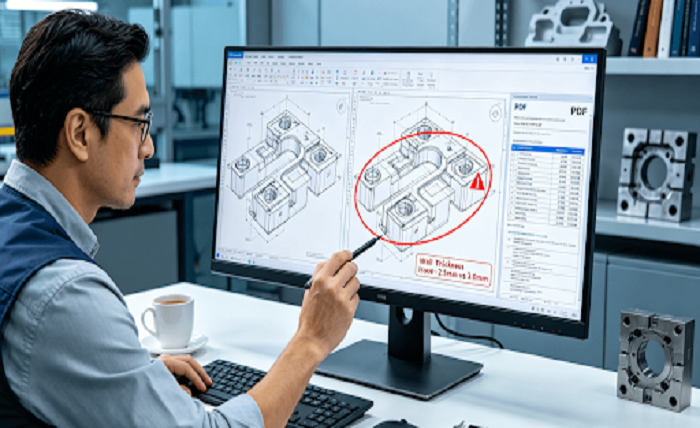
The most important aspect of any quality quote is the inclusion of a detailed Design for Manufacturability (DFM) report, which highlights possible design challenges that may result in sink marks, warpage, and even ejection problems, among others. The DFM report should be proactive in offering solutions to these issues. The absence of this report in a quotation makes the quote highly speculative.
Furthermore, the quote should detail the proposed mold strategy, including its expected lifespan, number of cavities, and estimated cycle time. These factors are not just mold costs; they directly dictate the piece-part cost calculation at production scale. Suppliers that provide this depth, build the DFM process into their initial engagement, offering expert feedback to optimize designs for manufacturability and cost before tooling begins. To systematically understand how to interpret every item in a quote’s technical breakdown, one can refer to this detailed custom plastic injection molding service.
How to Judge a Supplier’s Precision Engineering Capability from Quote Details?
The level of expertise of the supplier’s Precision Engineering department becomes obvious from the level of detail in their quotation. Such examples could be the description of machining procedures with tolerances up to ±0.02mm or suggestions on using higher grade steel such as S136 for high-gloss surfaces.
Such competencies can be further confirmed via Quality System certifications. It is imperative to select suppliers certified to ISO 9001:2015, IATF 16949 (automotive) or AS9100D (aerospace) certifications among others. These are no mere symbols. Rather, they show that the supplier utilizes a reliable, repeatable and consistent process capable of producing items according to specified Technical Specifications.
A supplier who deserves to be considered as a reliable partner would not shy away from providing evidence. They would be able to provide calibration certificates for CMMs according to ISO 10360 guidelines or traceability reports for raw materials branded by specific suppliers.For businesses evaluating how to find reliable plastic injection moulding service, this data-driven transparency in the quoting stage is the first major indicator of a competent partner. A supplier’s commitment to quality is evident when they provide complete digital inspection reports, including First Article Inspection (FAI) records, as part of their standard delivery, ensuring full traceability.
How Do Mold Design Choices Impact Your Plastic Injection Molding Quote and Long-Term Cost?
The mold is the single largest cost driver in a plastic injection molding quote and the primary determinant of long-term production economics. A transparent quote should clearly specify the mold type (hardened steel vs. aluminum), projected lifespan, and the design of its cooling system.
The Economics of Mold Components and Process
The economic impact of mold engineering is evident in component and system choices. These decisions directly influence both the initial plastic injection molding quote and the long-term production cost per part.
- Cooling System Optimization
Choosing such a sophisticated system as conformal cooling can increase costs at the tooling stage, but it can also save up to 30% of the cycle time, which dramatically decreases the cost of manufacturing each piece in large batches.
- Gate Design Selection
The choice of gate design (edge, pin-point, or sub-gate) is a critical economic factor. It directly affects part aesthetics and the need for, and cost of, secondary finishing operations, thereby influencing the total cost of ownership for the molded part.
The Long-Term Investment in Mold Steel
The choice of material is an important decision to make. In cases where abrasion takes place, for instance when dealing with glass-filled resins, choosing the higher-quality corrosion-resistant steel will make it more expensive in terms of initial setup fees. But it will result in significantly low scrap ratios, such as 5% or less than 1%.
How to Remotely Verify the Feasibility of a Quote When Working with a Plastic Injection Molding China Supplier?
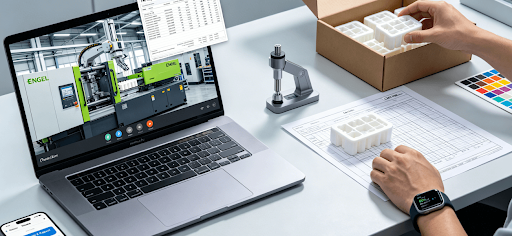
When partnering with a plastic injection molding china supplier, geographical distance should not be a barrier to quality assurance. The verification process must be agreed upon during the quoting stage. A professional supplier will outline a clear, data-driven validation protocol.
The first mold trial (T1) becomes a critical “data window.The quote or subsequent agreement should commit the supplier to providing: Scientific molding process curves demonstrating stable and repeatable cycles; A comprehensive First Article Inspection (FAI) report with actual measured values for all dimensions; and High-definition video documentation of key assembly or testing steps. This package is indispensable for remotely assessing the supplier’s ability to translate Precision Engineering from paper to part.
Establishing this objective, data-based remote verification workflow is the cornerstone of ensuring consistency from design to delivered part in any plastic injection molding in china project. It should be a non-negotiable criterion in supplier selection, transforming physical distance into a managed parameter rather than a risk.
Beyond Unit Price, What Commercial & Legal Terms Should a Comprehensive Plastic Injection Service Quote Cover?
A complete plastic injection service proposal or its accompanying draft contract must include clear commercial and legal terms to prevent disputes and protect the client’s long-term investment.
Core Clauses Protecting Your Assets
These two points cannot be negotiated since they are critical for your future investment. Firstly, the mold ownership should be made clear and defined in the contract. Secondly, the IP and confidentiality agreement (usually an NDA) is crucial to ensure that your intellectual property will be secured in the course of the cooperation.
Operational Clauses Defining Successful Delivery
Clear operational terms prevent disputes and ensure a smooth process. This encompasses two critical areas:
- Objective Acceptance Criteria
The quote must define measurable Acceptance Criteria. This includes dimensional compliance verified by a First Article Inspection (FAI) report and aesthetic approval against master samples or quantitative gloss readings, moving beyond subjective judgment.
- Logistics and Final Costs
Clarity in Incoterms and Logistics is key. This quote must contain Incoterms such as EXW, FOB, or DDP. A complete DDP (Door to Door) quote will include all shipping, insurance, and duties, giving you complete cost transparency and no surprises at delivery.
Conclusion
In summary, a trustworthy injection molding quote is a concentrated reflection of the supplier’s Precision Engineering strength and commercial integrity. It should not be a simple price but a comprehensive solution encompassing manufacturability analysis, detailed Technical Specifications, scientific mold design, verifiable quality processes, and clear commercial terms. By meticulously reviewing a quote through these five dimensions, procurement teams can effectively see past the lure of a low initial price and select a partner that truly controls total cost and ensures project success.
If you are sourcing critical components and seek a manufacturing partner that provides transparent, accurate quotes backed by full-cycle certification (including ISO 9001, IATF 16949, and ISO 13485), the professional team at JS Precision can provide a detailed quotation inclusive of a free, in-depth DFM analysis. Contact them today to begin an efficient and reliable partnership.
Author Bio
The article is authored by an independent manufacturing consultant. The author possesses vast experience in precision manufacturing and supply chain management and is adept at understanding the economics of manufacturing specifications for their cost and quality implications. The author is committed to maximizing manufacturing value for international businesses.
FAQs
Q: Apart from drawings, what information can be supplied during the first RFQ to obtain more accurate quotations?
A: Supplying the annual volume, quality specifications (such as critical dimensions’ tolerances, surface finish specifications), operating conditions of the part, and the preferred materials (brand and grade) would lead to better quotes and DFM analysis by the supplier.
Q: How can you quickly tell if a molding house is equipped with Precision Engineering capability?
A: By asking about their typical capability to control features within a tolerance range of <±0.05mm and requesting the FAI report for similar products. Also, asking about the frequency of calibration of their CMM and other inspection equipment would reveal the supplier’s Precision Engineering capabilities quickly.
Q: As mold costs constitute a considerable share of the total quotation, how do you judge whether your investment in such molds is worth it?
A: You need to look at various parameters: Is the material suitable for the expected volume and type of material? Does it contain conformal cooling channels? Is its life span long enough? The mold may be slightly expensive, yet it will lower the cost per unit and scrap rate significantly..
Q: How can we ensure that the “Door-to-Door (DDP)price in the quotation provided by an overseas supplier is clear and firm?
A: Ask the supplier to break down the key elements of DDP price: international shipping costs, duties, insurance, and clearance fees. Selecting a supplier who has rich expertise in cross-border logistics and can supply comprehensive customs documentation is crucial to avoid extra charges on port delivery.
Q: What does the IATF 16949 accreditation indicate about an injection molding supplier?
A: The IATF 16949 is the best quality management system standard in the auto industry. A company accredited in IATF 16949 has applied systematic procedures for process control, risk avoidance, and improvement. The stability, change management, and traceability of process for the accredited supplier far outclass the unaccredited counterpart, making a powerful recommendation for delivery credibility.